A practical test of Figma Weave as a concept-to-mesh pipeline, taking a hand-drawn sketch through prompt engineering, AI image generation, and 3D model output in a single connected workflow.
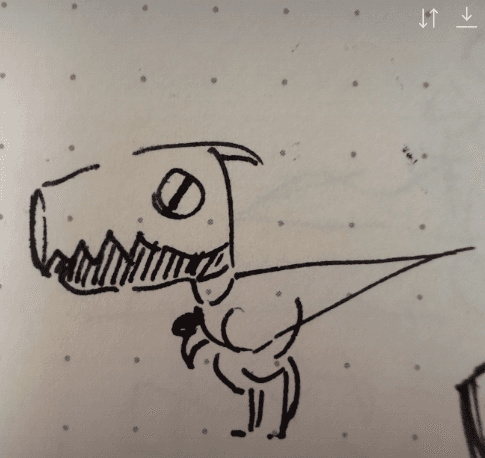
An exploration into using Figma Weave as a concept-to-mesh pipeline, using a rough personal sketch as the starting point and a retopology-ready 3D model as the target output. The creature being developed here is intended for an animation project currently in production.
Process
How it got made.
Selected stills for the project, either a in-progress image or a reference.
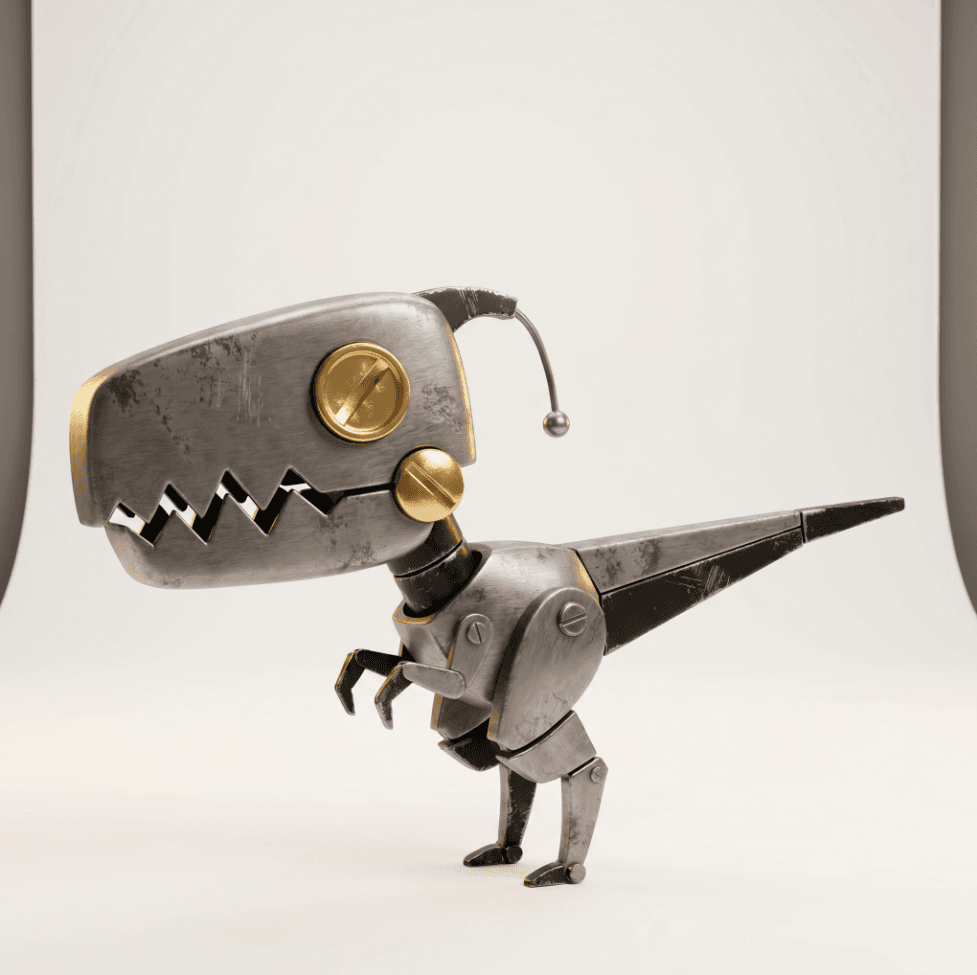
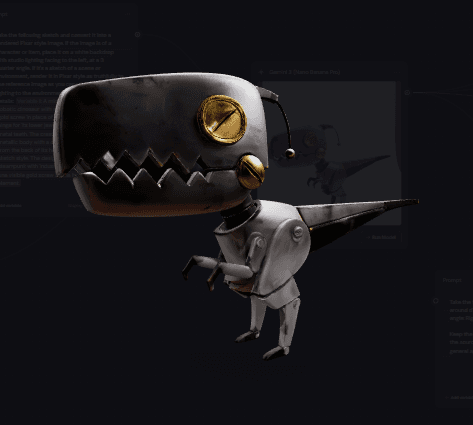
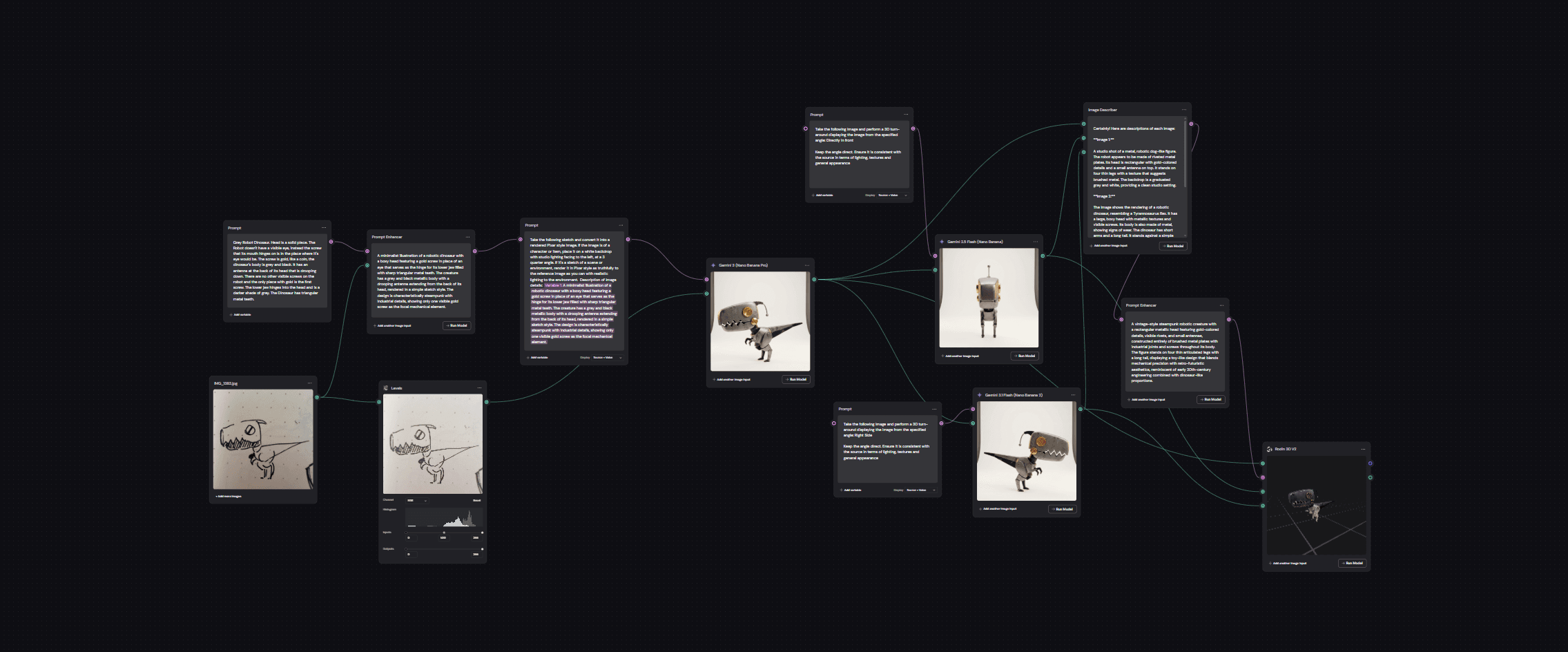
The workflow, visible in the node graph above, chains prompt enhancement stages into image generation, producing multiple angle passes that are then used as reference inputs for 3D generation. Arriving at a stable version of this pipeline required significant experimentation. Figma Weave provides no guidance on model performance or recommended use cases, so understanding which models work well for which tasks is entirely the result of trial and error.
For image generation, Gemini 2.5 Flash (Nano Banana) proved the most consistent at interpreting a sketch and following a prompt with minimal hallucination. On the 3D side, the models varied widely in quality. Without a well-constructed prompt and multiple reference images, outputs drifted significantly from the source material. Once properly constrained, Rodin 3D V2 produced the strongest results.
The output mesh requires correction in Blender or Maya before it is animation-ready, but as a first-pass pipeline from sketch to workable 3D base, the workflow is effective. Figma Weave is a genuinely capable tool, though one that rewards patience and a willingness to treat early sessions as research.